Comparing Weight, Tear Strength, and Durability Specs for Ultra, Cordura, DCF, and UltraGrid
One of the most common questions our customer service team gets every year is "What fabric should I choose?" We live in a golden age of textile engineering where the gap between ultralight weight and bombproof durability is closing fast. But looking at manufacturer spec sheets can feel like reading a foreign language. Denier, Taber cycles, hydrostatic head, warp/weft tear strength—what does it all actually mean for you when you are in the woods?
To help clear the air, I dug into the industry's most reputable lab tests and spec sheets (like ASTM standards via Challenge Sailcloth, Ripstop by the Roll, and Dimension-Polyant data) to compare five of the most popular pack fabrics on the market today: Ultra 200X, 500D Cordura, 210D Robic Nylon, Dyneema Composite Fabric (2.92 oz DCF), and UltraGrid.
Here is how these heavyweight (and lightweight) contenders stack up.
The Old Guard vs. The New Wovens
If we rewind ten years, 500D Cordura was the undisputed king of durability. It is a traditional high-tenacity woven nylon with a polyurethane (PU) coating. It thrives in high-abrasion environments like canyoneering or off-trail bushwhacking. However, from a modern design perspective, it’s heavy (often exceeding 8 oz per square yard) and it holds onto water weight when it rains. A quick fifteen minute rainstorm without a pack cover can add pounds to your pack!
On the other end of the traditional spectrum is 210D Robic Nylon (and similar high-tenacity ripstops). Robic has been the workhorse of the ultralight cottage industry for years. It's incredibly affordable, shaves the weight down to about 4.2 oz/yd², and is plenty durable for well-maintained trails. However, neither Cordura nor Robic are truly waterproof; their PU coatings generally degrade over time, and they boast a relatively low Hydrostatic Head (water resistance) of around 1,000mm to 1,500mm.
Bridging the gap in the woven category is UltraGrid by Challenge Sailcloth. It takes a traditional 210D recycled nylon and weaves a grid of UHMWPE (Ultra High Molecular Weight Polyethylene—the same fiber used in Dyneema) into the ripstop. This results in a fabric that weighs roughly the same as 210D Robic (4.3 oz/yd²) but vastly improves tear strength and abrasion resistance.
The Laminate Revolution
When we talk about premium, waterproof pack fabrics, we are looking at laminates. Dyneema Composite Fabric (DCF)—specifically the 2.92 oz/yd² hybrid variant (also known as DCF50)—disrupted the market by sandwiching Dyneema fibers between mylar films and a 50-denier polyester face. It is 100% waterproof (>20,000mm hydrostatic head) and possesses incredible tensile strength. However, designers know its Achilles' heel: abrasion. The 50D face fabric wears down quickly against granite (around 500 Taber cycles), and the mylar film is prone to micro-pinholes over years of repeated folding and crunching. We see this in our tents.
Enter Ultra 200X. Currently the crown jewel of pack fabrics, Ultra 200X uses a woven face of 66% UHMWPE fibers and 34% recycled polyester, laminated to a waterproof film with a cross-ply reinforcement. It completely blows traditional fabrics and DCF out of the water in terms of specs. Weighing only 3.5 oz/yd², it boasts over 4,400 Taber abrasion cycles (double that of 500D Cordura) and a warp tear strength of 114 lbs.
The Specs: By the Numbers
To translate all of this lab data into trail reality, I have compiled the ASTM-tested data into visual charts.
Note: Specs can vary slightly by dye lot and manufacturer coatings, but these represent the industry-standard baselines for each material.
Chart 1: Weight vs. Tear Strength
Tear strength (measured in pounds to rip the fabric) is vital if you snag your pack on a stray branch. Notice how the UHMWPE-based fabrics (Ultra and Dyneema) dominate this metric despite their low weight. Choke Cherries and Oak bruch thickets can be a fabrics worst nightmare. Not Ultra or Dyneema...

? Chart 2: Abrasion Resistance (Taber Cycles)
Taber cycles measure how many rotations of a standardized abrasive wheel it takes to wear through the fabric. This is your "sliding down a granite rock face" metric or the "how many times can I pull a heavy pack out of a truck bed" stat.

Chart 3: Water Resistance (Hydrostatic Head)
Hydrostatic Head (HH) measures how many millimeters of a water column a fabric can hold before water seeps through. Anything over 10,000mm is generally considered completely waterproof. Traditional woven fabrics will "wet out" eventually, while film-backed laminates will not. Think about hiking through rain or snow or setting your pack down on wet grass.

The Seek Outside Verdict: Why We Don’t Compromise
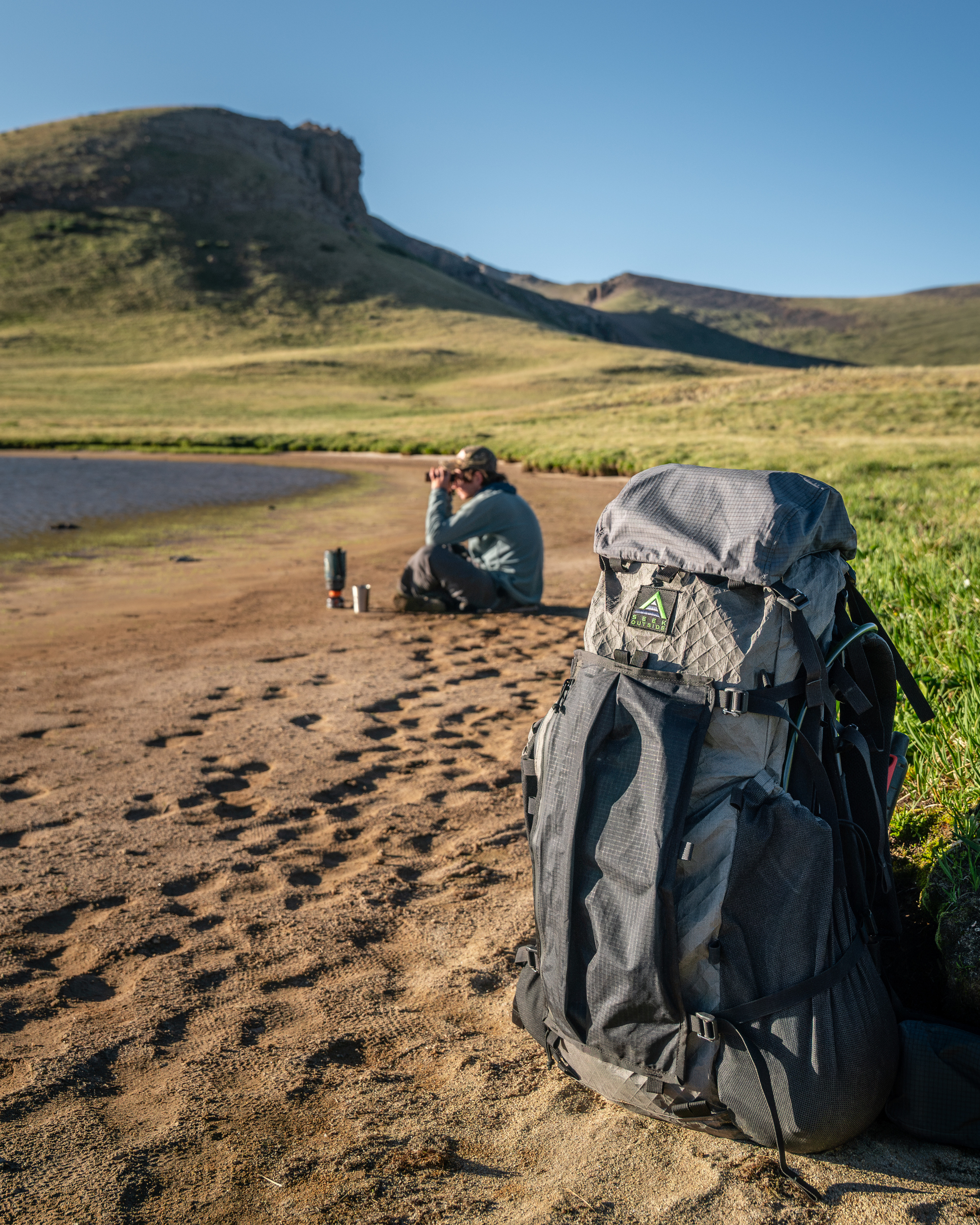
At Seek Outside, we don’t build gear for casual weekend strolls or manicured gravel paths. We build for extreme use cases and the most hardcore user groups on the planet—expedition guides, backcountry hunters, and wilderness professionals who push their gear to the absolute limit where failure isn't an option. When you are miles deep in uncharted territory, your pack is your lifeline. That's why we use Ultra 200 in the majority of our backpacks.
We know premium laminates come with a higher price tag, but our extensive real-world experience with Ultra 200 completely justifies the cost. Since integrating this fabric into our lineup, the data speaks for itself: we see significantly fewer repairs coming back through our shop. The material simply refuses to quit.
To put its durability into perspective, the first pack i got when i started working here was in ultra 200 and it has been subjected to brutal abuse for over 80 days a year, for 5 years straight. By all traditional metrics, the pack should have at least some seen decline in performance or at most been shredded! Instead, it doesn't have one hole and doesn't let water in.
While budget-friendly options like 210D Robic or Cordura are fine (we use cordura in spots where it makes sense) for standard trails they simply don't hold up to extreme, prolonged abuse. And while old-school 500D Cordura is tough, its weight and tendency to absorb water like a sponge make it a liability on true wilderness expeditions. For our users, who demand an uncompromising blend of ultralight weight, absolute waterproofness, and bombproof abrasion resistance, Ultra 200 stands in a league of its own.