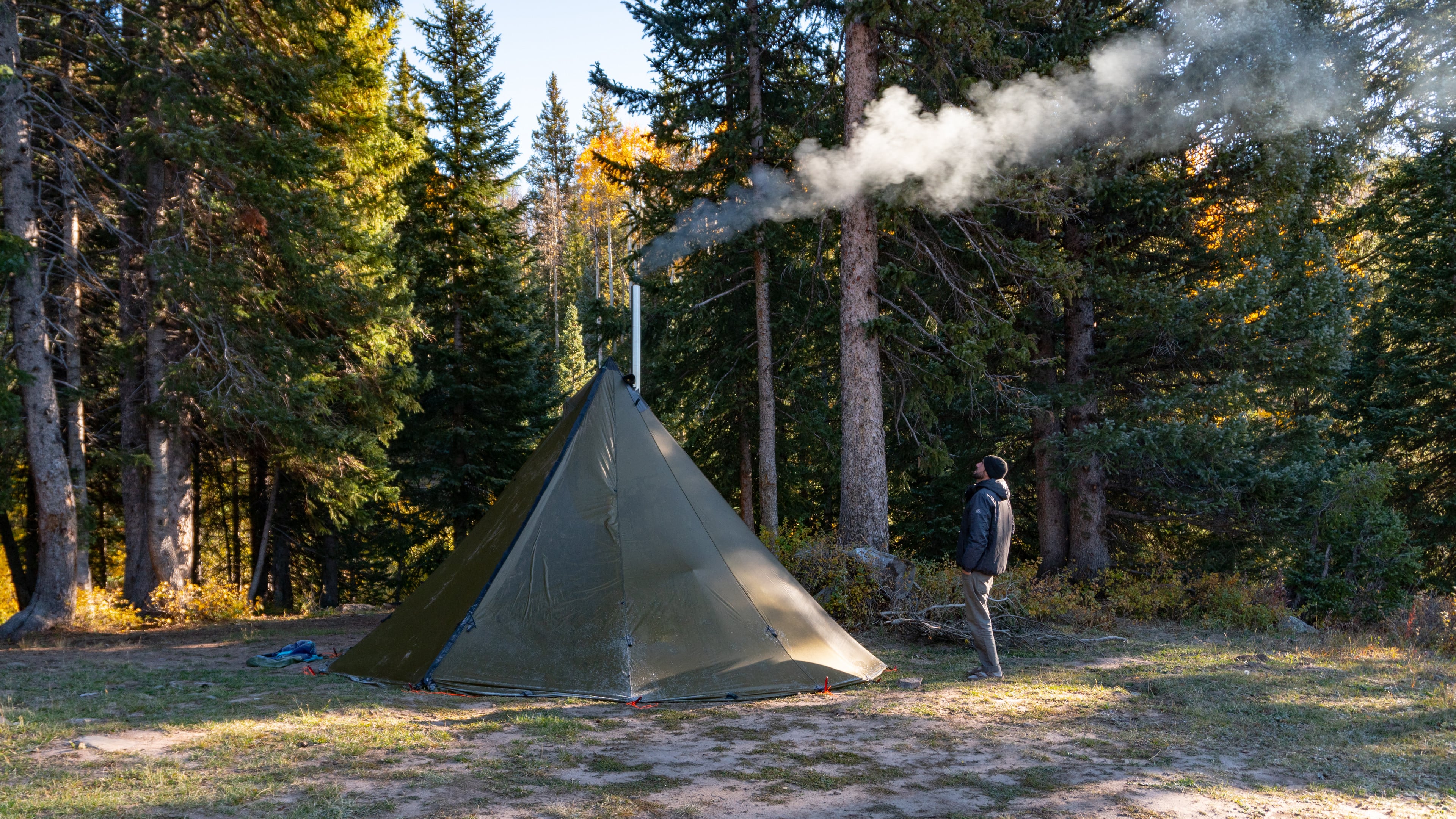
Tipis and Pyramid Shelters vs. Traditional Tents: Which Shelter Is Best for You
If you're researching backpacking shelters, you've probably noticed two very different designs: traditional freestanding tents and tipis or pyramid shelters.
Both protect you from the elements, but they're built with different priorities in mind. Traditional tents focus on convenience and enclosed comfort, while tipis and pyramid shelters emphasize lightweight performance, weather resistance, and versatility.
At Seek Outside, we build tipis and pyramid shelters because they're designed for people who spend serious time in the backcountry. That doesn't mean they're the right choice for every camper.
This guide compares the advantages and disadvantages of both shelter styles so you can decide which best fits your adventures.
What Is a Traditional Backpacking Tent?
A traditional backpacking tent uses a dedicated pole system to create a freestanding structure with an integrated floor and a separate rainfly. Most models also include a mesh inner tent for ventilation and insect protection.
For many campers, especially those staying in established campgrounds or taking weekend backpacking trips, traditional tents offer a familiar and straightforward setup.
Advantages of Traditional Tents:
- Quick and intuitive setup
- Freestanding design works well on many campsites
- Sewn-in floor keeps dirt and mud outside
- Excellent insect protection with integrated mesh
- Minimal learning curve for first-time campers
Limitations of Traditional Tents:
While traditional tents work well for many situations, they also have tradeoffs.
Dedicated pole systems add weight and bulk to your pack. Their fixed shape offers limited ventilation adjustments, and many three-season backpacking tents aren't designed for heavy snow or sustained mountain winds.
Most importantly, they're optimized for a specific type of camping—typically fair-weather backpacking or campground use—rather than year-round versatility.
What Is a Tipi or Pyramid Shelter?
Tipis and pyramid shelters use a single center pole—often a lightweight carbon fiber pole or trekking poles—to create a strong, tensioned structure.
Instead of relying on complex pole systems, the shelter's shape provides its strength.
The result is a shelter that offers exceptional space, low weight, and reliable performance across a wide range of conditions.
Why Choose a Tipi or Pyramid Shelter?
- Exceptional Strength in Wind and Snow
- The pyramid shape is one of the strongest shelter designs available.
- Steep walls naturally shed snow instead of allowing accumulation, while sloped sides help wind flow around the shelter instead of pushing against broad vertical walls.
- This geometry has been proven for decades in harsh mountain environments where weather can change quickly.
- Lightweight Design Without Sacrificing Space
By eliminating complex pole systems, tipis and pyramid shelters achieve an outstanding strength-to-weight ratio.
For the amount of usable interior space they provide, they're often significantly lighter than comparable freestanding tents.
For backpackers, hunters, and anyone carrying gear over long distances, every ounce saved matters.
More Usable Interior Space
Unlike many backpacking tents with sharply sloping walls, tipis maximize interior volume.
The higher peak height creates comfortable headroom for:
- Changing clothes
- Organizing gear
- Waiting out storms
- Sleeping multiple people comfortably
Whether you're traveling solo or with a group, the extra living space becomes noticeable after just one night in camp.
True Four-Season Performance
Many tipi and pyramid shelters are designed to perform throughout the year.
They're ideal for:
- Summer backpacking
- Early-season hiking
- Fall hunting trips
- Winter camping
- Backcountry skiing
- Extended base camps
Many Seek Outside shelters are also compatible with lightweight titanium wood stoves, creating a warm, dry shelter that extends your camping season far beyond what most backpacking tents can offer.
Click here to read more about our titanium wood stoves
Simple, Reliable Construction
Fewer poles mean fewer components that can bend, break, or fail.
A properly pitched pyramid shelter is remarkably dependable and generally easier to repair in the field than shelters relying on proprietary pole systems.
If your pole fails you can simply use a tree cut to length. Each one of our Tipi or Pyramid shelters poles are designed to fail before the shelter does due to wind or snow load.
Are There Any Downsides to Tipis and Pyramid Shelters?
No shelter design is perfect.
Tipis and pyramid shelters offer significant advantages, but they also require a different approach than traditional tents.
They Require Practice to Pitch
A pyramid shelter isn't difficult to set up, but achieving a tight, symmetrical pitch takes practice.
After a few trips, most users can pitch one quickly, but there is more technique involved than assembling a freestanding tent.
Condensation Management
Condensation is one of the most common questions people ask about pyramid shelters.
Traditional double-wall tents separate the sleeping area from the rainfly, so moisture typically forms on the outer fly rather than directly above the occupants.
Single-wall pyramid shelters can allow condensation to form on the inside surface of the shelter. If enough moisture builds up, it can drip or mist onto occupants when wind or rain shakes the fabric.
Seek Outside offers removable condensation liners for our tipi and pyramid shelters.
These liners create a barrier that captures condensation and allows moisture to run down the sides instead of dripping into the living area.
Proper ventilation also plays an important role in reducing condensation, regardless of the shelter you choose.
Click here to learn more about condensation management.
Floorless Shelters Aren't for Everyone but They Might be For You
Many Seek Outside shelters are intentionally designed without sewn-in floors.
A floorless shelter allows you to:
- Pitch on uneven ground
- Bring wet or muddy gear inside
- Use a compatible wood stove safely
- Reduce overall pack weight
With a floorless design there is no more taking your boots or rain jacket off before you walk into the tent. This also allows for an optimal space for drying wet gear during those snowy camps.
For campers who prefer a more traditional sleeping environment, many of our shelters can also be paired with optional nests or floor systems that provide bug protection and a removable floor system.
Tipi & Pyramid Shelters vs. Traditional Tents
|
Feature |
Tipi & Pyramid Shelter |
Traditional Tent |
|
Weight |
Excellent |
Good |
|
Interior Space |
Excellent |
Moderate |
|
Wind Resistance |
Excellent |
Excellent |
|
Snow Performance |
Excellent |
Varies by model |
|
Stove Compatible |
Yes |
Rarely |
|
Freestanding |
No |
Yes |
|
Learning Curve |
Moderate |
Easy |
|
Floor Included |
Optional |
Yes |
|
Four-Season Use |
Excellent |
Depends on model |
Which Shelter Is Right for You?
A traditional backpacking tent is a great choice if you:
- Camp primarily in established campgrounds
- Take occasional summer backpacking trips
- Prefer a fully enclosed shelter with minimal setup learning
A tipi or pyramid shelter may be the better choice if you:
- Backpack long distances
- Hunt in remote areas
- Camp in changing mountain weather
- Need a shelter for multiple seasons
- Want the option to use a lightweight wood stove
- Value maximum interior space with minimal pack weight
Why Seek Outside Builds Tipis and Pyramid Shelters
At Seek Outside, our goal has never been to build a shelter for just one season or one type of trip.
We design shelters that adapt to changing conditions and different styles of backcountry travel—from summer backpacking to late-season hunting and winter camping.
Years of testing, customer feedback, and continual refinement have shaped our shelters into lightweight systems built for dependable weather protection, long-term durability, and exceptional versatility.
If your adventures regularly take you beyond the trailhead, a well-designed tipi or pyramid shelter can provide a level of performance that's difficult for traditional tents to match.
Written by: Connor Burke
Author Credentials / Note: I have been working at Seek Outside and using our products for 3 years now. I have spent countless nights in the back country from -5 degrees fahrenheit at high alpine lakes to summer nights in the barren desert of western Colorado. I have camped in lightweight free standing tents, wall tents, tarps, tipis, and trekking pole shelters. There are advantages and disadvantages to all of them but my choice in the back country is always a Tipi or Pyramid tent due to its versatility, durability and incredible interior space, while still being able to carry it on my back.